
Simple Wood Fence Designs for Backyard Privacy & Style
A well-crafted wooden fence defines your property lines, boosts curb appeal, and provides essential security for family and pets. Homeowners often feel overwhelmed by the sheer number of custom building options available today. Fortunately, choosing simple wood fence designs allows you to achieve clean aesthetics and reliable privacy without exceeding your budget.
Streamlined wooden fencing styles focus on timeless patterns, structural integrity, and low maintenance. Whether you need full backyard screening or an open decorative perimeter, understanding fundamental wooden fence styles helps you select the best layout for your yard.

Wooden Fence Style Comparison Chart
| Fence Design Style | Privacy Level | Airflow / Visibility | Average Installation Cost | Ideal Backyard Use Case |
| Vertical Board-on-Board | 100% Full Privacy | Low Airflow / Zero Visibility | Moderate to High | Backyards, pool enclosures, noise reduction |
| Standard Stockade (Dog-Ear) | 90–95% Privacy | Minimal Airflow / Low Visibility | Budget-Friendly | Fast perimeter security, pet containment |
| Traditional Picket | Low (Decorative) | High Airflow / High Visibility | Budget-Friendly | Front yards, garden borders, cottage styles |
| Modern Horizontal Slat | 80–90% Privacy | Moderate Airflow / Partial Shadow | Moderate to High | Contemporary homes, urban patio spaces |
| Shadowbox (Board-and-Batten) | Semi-Private | Balanced Airflow / Angle-Only View | Moderate | High-wind areas, shared neighbor boundaries |
5 Popular Simple Wood Fence Designs for Your Property
Selecting the right fence design requires balancing your visual preferences with practical needs. Here are five classic, straightforward styles that continue to dominate residential yards.
1. Standard Stockade or Dog-Ear Fence
The dog-ear fence stands as the most common residential perimeter option. Builders cut the top corners of each vertical picket at an angle, resembling a dog’s ear. This small cut adds subtle detail while allowing water to run off the top edge easily.
This design offers high privacy at an economical price point. Because the pickets butt up next to each other along horizontal runner rails, installation moves quickly.
2. Board-on-Board Privacy Fence
If total seclusion remains your main goal, board-on-board construction delivers complete privacy. Standard vertical fences leave minor gaps when wood naturally shrinks over time. Board-on-board designs eliminate this problem by overlapping vertical pickets.
The builder nails a base layer of boards to the frame with small gaps between them. Then, they nail an overlapping top layer directly over those gaps. This creates a dimensional pattern while completely blocking sightlines from outside.
3. Classic Vertical Picket Fence
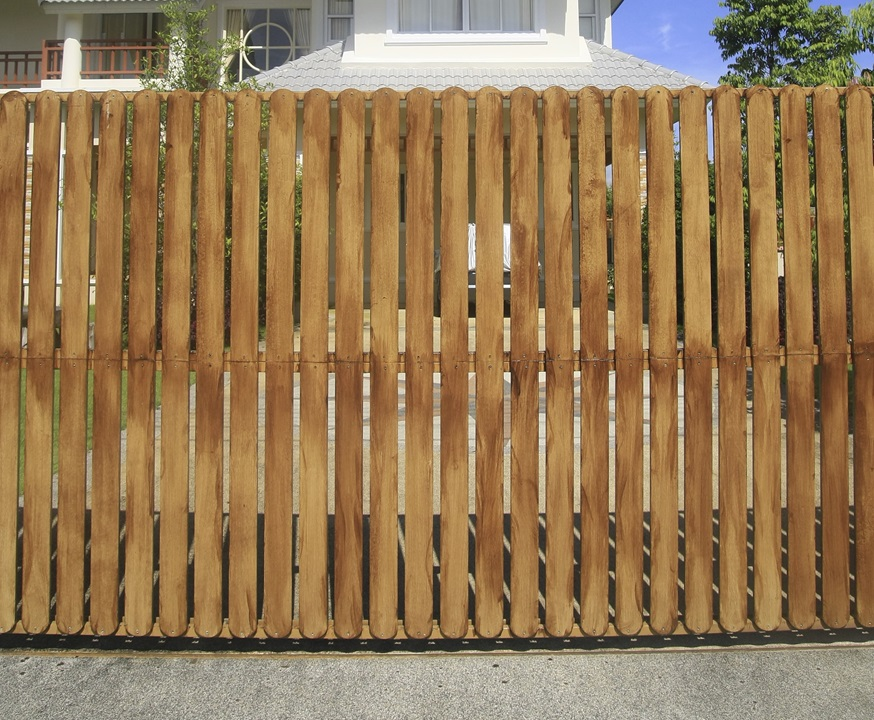
Picket fencing provides an iconic, welcoming border ideal for front yards and garden areas. Instead of tall, solid panels, picket fences feature spaced vertical pickets topped with pointed, rounded, or gothic caps.
Because gaps separate each picket, these fences allow maximum light and breeze to pass through. They keep dogs and kids safely in the yard without closing off your view of the neighborhood.
4. Modern Horizontal Slat Fence
Horizontal fencing has grown rapidly in popularity among modern and mid-century homes. Instead of attaching pickets vertically, installers run long wooden boards parallel to the ground along sturdy fence posts.
Horizontal lines make small yards feel larger and wider. You can space the boards closely together for a sleek privacy barrier or leave wider gaps for a lighter, modern look.
5. Shadowbox (Good Neighbor) Fence
A shadowbox fence alternates pickets on the front and back sides of the support rails. This setup creates a semi-private barrier that looks identical from both sides of the property line.
Because air passes easily through the staggered pickets, shadowbox fences withstand high wind gusts far better than solid walls. They offer a friendly option when sharing installation costs with next-door neighbors.
Choosing the Best Wood Species for Your Project
The durability of your fence depends heavily on the wood species you choose. Different lumber types offer varying levels of resistance to moisture, rot, and insect damage.
- Western Red Cedar: Cedar contains natural oils that repel insects and resist rot naturally. It features a rich grain, smells great, and shrinks very little over time.
- Pressure-Treated Pine: Chemical pressure treatment forces preservative solutions deep into pine lumber. This process makes pine highly resistant to soil rot and termites at an affordable cost.
- Redwood: Redwood represents a premium option with incredible natural strength and beautiful reddish tones. It stands up to harsh weather conditions with minimal warping.
According to research from the Forest Products Laboratory (USDA Forest Service), selecting naturally decay-resistant species or properly treated lumber significantly extends the service life of outdoor wooden structures.

Key Steps to Plan Your Fence Installation
A smooth installation process requires careful preparation before digging post holes or setting boards.
- Verify Boundaries: Review your land survey to ensure post holes sit strictly within your property lines.
- Call Utilities: Dial your local utility locator line before digging to avoid underground power, water, or gas lines.
- Set Deep Posts: Dig post holes deep enough typically one-third of the total post length and set them in concrete for structural stability.
- Apply Protective Stain: Seal your new fence with a quality exterior stain or water sealant within a few weeks of installation to shield the wood from UV rays.