
Innovative Dog Fence Ideas for Texas Homeowners
Keeping a beloved four-legged family member safe and secure is a primary responsibility for pet owners across the Lone Star State. Dogs need ample outdoor space to run, play, and burn off energy. However, allowing them unsupervised access to an unsecured yard poses a massive safety hazard. From bustling neighborhood traffic and native wildlife threats to the simple urge to wander, an open perimeter leaves your pet highly vulnerable. Consequently, exploring creative and secure dog fence ideas is an essential property upgrade for any homeowner.
Many property owners mistakenly assume that any standard backyard barrier is sufficient to contain a determined pup. In reality, however, different breeds possess unique behavioral traits. Some dogs are natural diggers, others are high-flying jumpers, and small breeds are master escape artists who slide through tiny structural gaps.
Therefore, in a large state like Texas, matching your pet’s physical capabilities to the correct framework is vital. This comprehensive guide breaks down the most reliable pet containment options, analyzes how various materials handle harsh regional elements, and outlines a structured installation playbook to help you build a secure paradise for your dog.
The Core Science: Balancing Pet Behavior with Structural Engineering
To select the best option from various dog fence ideas, it helps to understand the basic physics of how animals interact with physical barriers. Pet containment engineering focuses heavily on eliminating three primary escape mechanisms: jumping over, digging under, or chewing through the barrier.
Standard backyard structures face severe environmental challenges in Texas. These include blistering summer heatwaves, shifting expansive clay soils, and aggressive subterranean termites.
For instance, if your dog is a natural digger, burying a boundary line strictly flush with the grass line is a major engineering mistake. When the local clay soil dries out and cracks during a summer drought, it creates pre-existing subsurface fissures. A determined dog can exploit these gaps, rapidly excavating a tunnel beneath the frame in a matter of minutes. Consequently, you must choose a design configuration that reinforces the ground line while remaining strong enough to handle constant physical impacts from an energetic pet.
Quick Reference: Pet Containment Solutions & Performance
Before selecting a specific boundary design, it is important to match the physical traits of your dog to the correct material matrix. Review this professional structural guide to compare your options:
| Fence Configuration | Security Target | Core Escape Protection | Climate & Soil Resilience | Ideal Dog Profile |
| Solid Cedar Privacy | Jumpers & Barkers | Eliminates visual triggers; completely prevents climbing. | Excellent – High natural oils resist warping and local pests. | Reactive barkers, large breeds, and jumpers. |
| Galvanized Chain Link | Chewers & Climbers | Provides absolute structural strength; cannot be chewed. | Outstanding – Zinc coating prevents rust and requires zero upkeep. | Highly active chewers and medium-sized breeds. |
| Hog Wire & Wood Frame | Small Escape Artists | Tight grid patterns prevent small dogs from squeezing through. | High – Open mesh allows high winds to pass safely. | Small breeds, terriers, and sight hounds. |
| Puppy Picket Aluminum | Small Breeds | Double-spaced bottom rails block tiny bodies safely. | Outstanding – Non-ferrous metal will never rust or rot. | Toy breeds, puppies, and low-traction diggers. |
Deep Dive: Analyzing Top Dog Fence Ideas
1. Solid Board-on-Board Cedar: The Visual Blocker
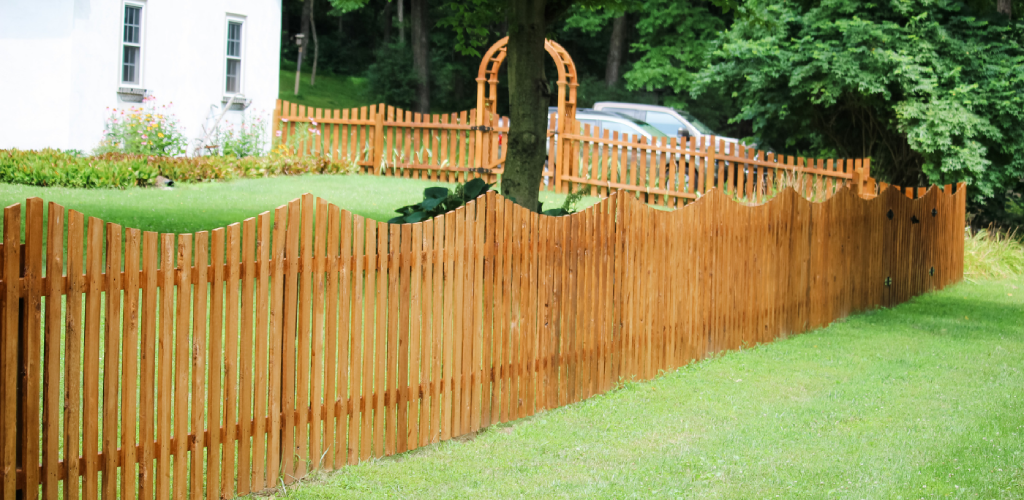
If your dog suffers from barrier frustration or barks continuously at neighbors, passing cars, or local wildlife, a solid board-on-board Western Red Cedar structure represents one of the single dog fence ideas for your property. Traditional side-by-side fences can shrink slightly over time, creating small visual gaps between the pickets. A board-on-board layout, however, utilizes overlapping vertical pickets. This design configuration completely eliminates any potential gaps, blocking your dog’s line of sight entirely.
By removing external visual triggers, you instantly lower your pet’s cortisol and anxiety levels while they are out in the yard. Furthermore, Western Red Cedar exhibits exceptional dimensional stability. It shrinks and swells minimally when exposed to dramatic Texas weather shifts. Consequently, your pickets stay perfectly flat and straight, preventing agile dogs from finding structural footholds to climb over the top.
2. Reinforced Chain Link with a Dig Barrier: The Indestructible Zone
For property owners caring for large, high-energy breeds with powerful jaws such as German Shepherds, Boxers, or Pit Bulls material strength is paramount. Rigid galvanized chain link provides an incredibly cost-effective, heavy-duty framework that easily withstands continuous physical impacts and determined chewing attempts.
To solve the issue of a dog digging under a chain link boundary, professional installers implement a subterranean kick-board or an L-shaped wire mesh apron. Technicians extend the steel mesh roughly 12 to 18 inches down vertically into the earth, or fold it horizontally along the trench floor facing inward toward the yard. Once backfilled with soil and gravel, this subsurface shield acts as an absolute physical dead-end for paws. Therefore, even if your dog digs continuously, they can never breach the bottom line.
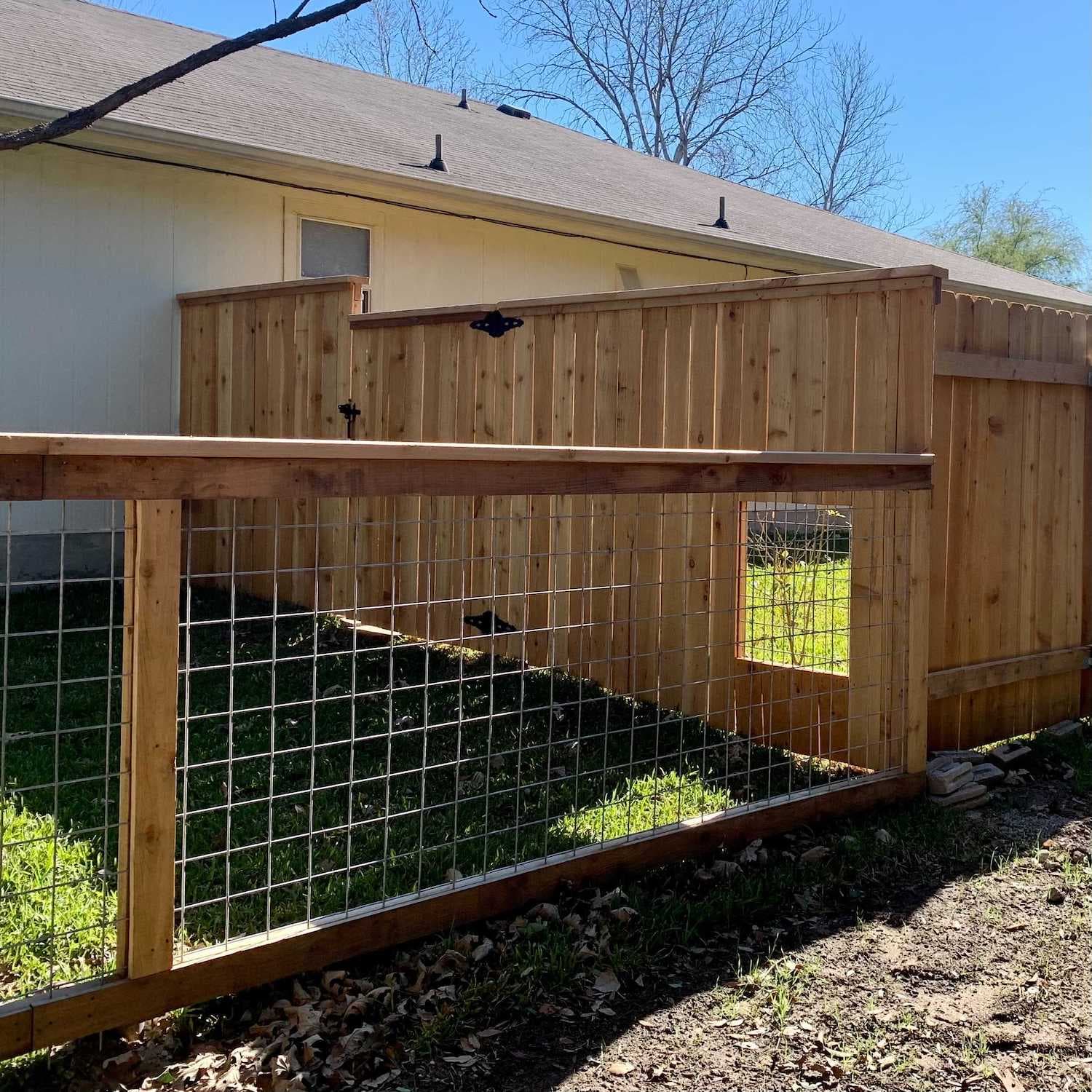
3. Modern Hog Wire Panels: Security with a View
If you live along a beautiful greenbelt or backing up to the Texas Hill Country, you likely want to contain your pets without blocking your gorgeous views. Modern hog wire panels offer a spectacular, contemporary solution. This style utilizes a robust structural wood frame often crafted from pressure-treated pine or cedar to encase heavy-duty, 4-gauge galvanized steel wire grids.
The tight, rectangular grid pattern (typically 2×4 inches or 4×4 inches) is perfectly sized to keep small and medium-sized dogs safely contained. Because the wire is incredibly thick, it will not bend or warp when a large dog jumps against it. Furthermore, the open-grid design allows heavy spring windstorms to pass through the perimeter cleanly, drastically reducing wind load stress on your concrete footers.
Step-by-Step Playbook: Building a Pet-Safe Perimeter
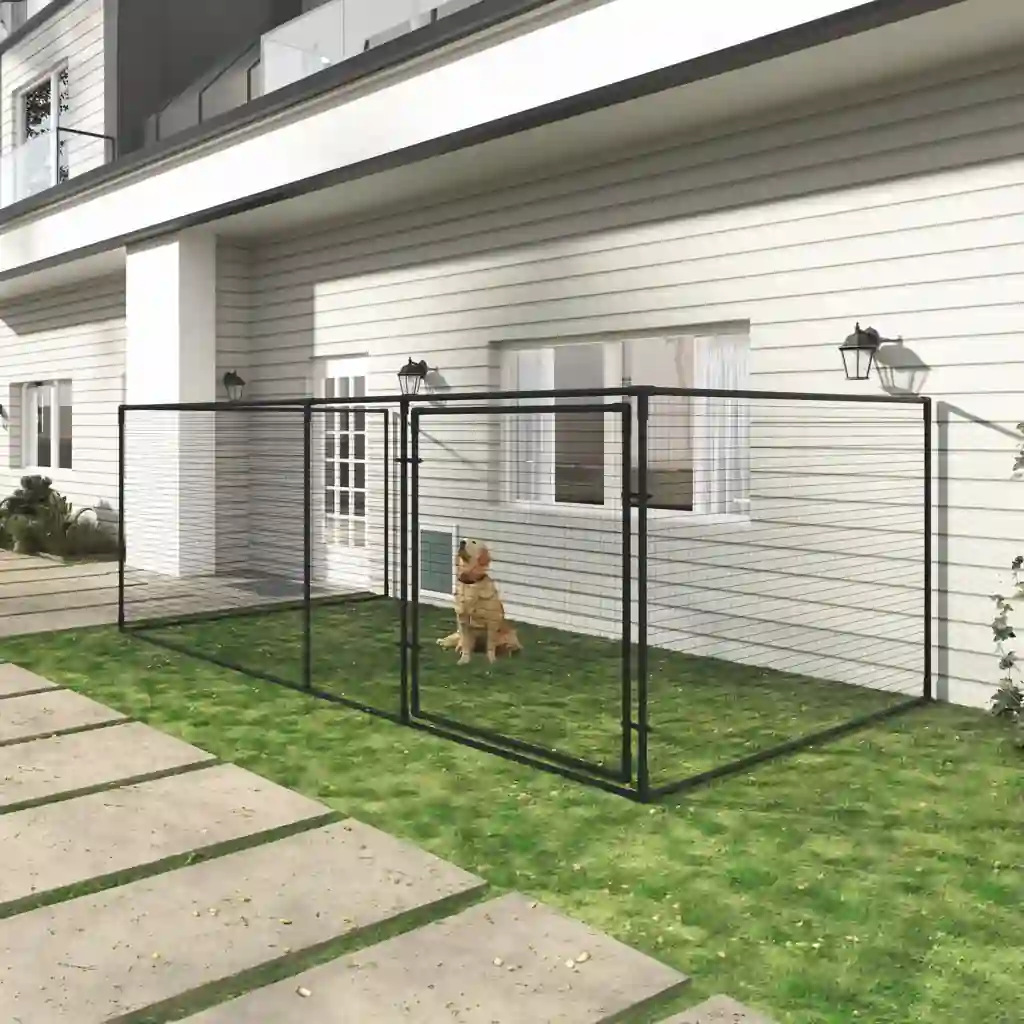
Constructing a reliable, escape-proof containment zone requires a highly precise engineering sequence. Skipping critical steps to accelerate a project will inevitably result in structural failures that your pet will quickly exploit. Therefore, professional installation crews follow a strict, safety-conscious protocol.
The Pet-Safe Construction Protocol
1.1. Identify Property Borders and Call for Utility Line Marking:Legal Check.
Before breaking ground, always consult your official property survey plat maps to verify your exact boundaries. Additionally, dial 811 to have local utility technicians map out all buried electrical, gas, and fiber-optic communication lines completely for free, preventing dangerous utility punctures and massive liability fines.
2.2. Stake the Perimeter Line and Target Post Gaps:Layout Map.
Drive wooden stakes into the ground at each corner position and stretch a bright nylon line tightly between them to create a straight edge. Mark your intermediate post locations evenly along the string, keeping gaps strictly between 6 and 8 feet to ensure the final frame can support physical pet impacts safely.
3.3. Dig Deep Post Holes and Reinforce the Underground Base:Ground Prep.
Utilize a manual post-hole digger or a mechanical auger to dig holes down a minimum of 24 to 36 inches deep, ensuring the post anchors sit below the loose topsoil layer. Pour three inches of loose crushed gravel into the bottom of each hole to allow rainwater to drain away from the core base of the post, preventing wood rot.
4.4. Pour High-Strength Concrete Footers Around Posts:Structural Anchoring.
Place your structural wood or galvanized steel posts directly into the center of the holes and verify they are perfectly plumb using a spirit level. Pour wet, commercial-grade concrete around each post, sloping the top surface slightly outward above the ground line to shed rainwater away from the structural framing.
5.5. Mount Framing Rails and Integrate the Dig Barrier:Final Security.
Once the concrete cures completely for 48 hours, mount your horizontal backer rails using hot-dipped galvanized fasteners. Next, install your pickets or wire panels. Crucially, ensure you anchor your subterranean dig barrier or tension wire firmly along the bottom line, leaving zero soft spots where a dog could push through.
Navigating Environmental Health and Safety Compliance
When implementing large-scale dog fence ideas across your property, owners must remain mindful of environmental standards, local municipal codes, and zoning ordinances. Utilizing non-compliant materials or disrupting natural stormwater runoff patterns can result in severe municipal penalties and localized property degradation.
Specifically, if you choose pressure-treated lumber for your framing or subsurface kick-boards, ensure your materials fully comply with modern chemical safety criteria established by the Texas Commission on Environmental Quality (TCEQ). Modern residential treatments utilize safe, copper-based biocide formulas rather than the historic arsenic compounds of past decades. This environmental safeguard ensures that heavy seasonal downpours will not leach harmful toxins into your yard’s soil, keeping your grass, family, and pets completely safe from chemical exposure.