
Wood Fence Ideas for Texas Homes: Top Styles & Tips
A custom wooden fence does far more than establish property lines. It frames your yard, enhances architectural curb appeal, secures children and pets, and creates a private sanctuary for outdoor living. However, building a wooden boundary in the Lone Star State presents unique challenges. Texas weather subjects outdoor structures to intense summer UV radiation, sudden temperature swings, heavy thunderstorm winds, and expanding clay soils.
When evaluating wood fence ideas for your property, balancing visual style with raw structural engineering is essential. Installing improper lumber or lightweight posts can lead to sagging, twisting, and premature ground rot within just a few seasons.
Whether you desire a sleek, modern horizontal layout, a timeless board-on-board privacy barrier, or a high-contrast wood and metal hybrid, this guide explores top design options and structural best practices engineered to withstand the Texas climate.
At a Glance: Wood Fence Style Comparison Chart
To help homeowners compare popular styles at a glance, the following chart summarizes aesthetics, privacy performance, wind resistance, and ideal property applications across Texas yards.
Top Modern & Traditional Wood Fence Ideas for Texas Properties
Selecting the right design profile depends on your neighborhood’s architectural layout, local HOA guidelines, and personal privacy needs. Below are the leading styles transforming Texas residential landscapes today.
1. Board-on-Board Privacy Fencing
For homeowners seeking absolute seclusion, board-on-board construction is the gold standard in wooden privacy boundaries. Unlike traditional side-by-side pickets which can shrink over time under intense solar heat and create small gaps board-on-board designs overlap vertical pickets.
Because the front pickets overlap the rear pickets by approximately 1 to 1.5 inches, the fence maintains 100% complete visual privacy even when the wood naturally contracts during hot, dry summer spells. Adding a top cap and trim board creates an elegant, estate-style finish that protects the exposed top grain of the pickets from absorbing rainwater.
2. Contemporary Horizontal Wood Fencing
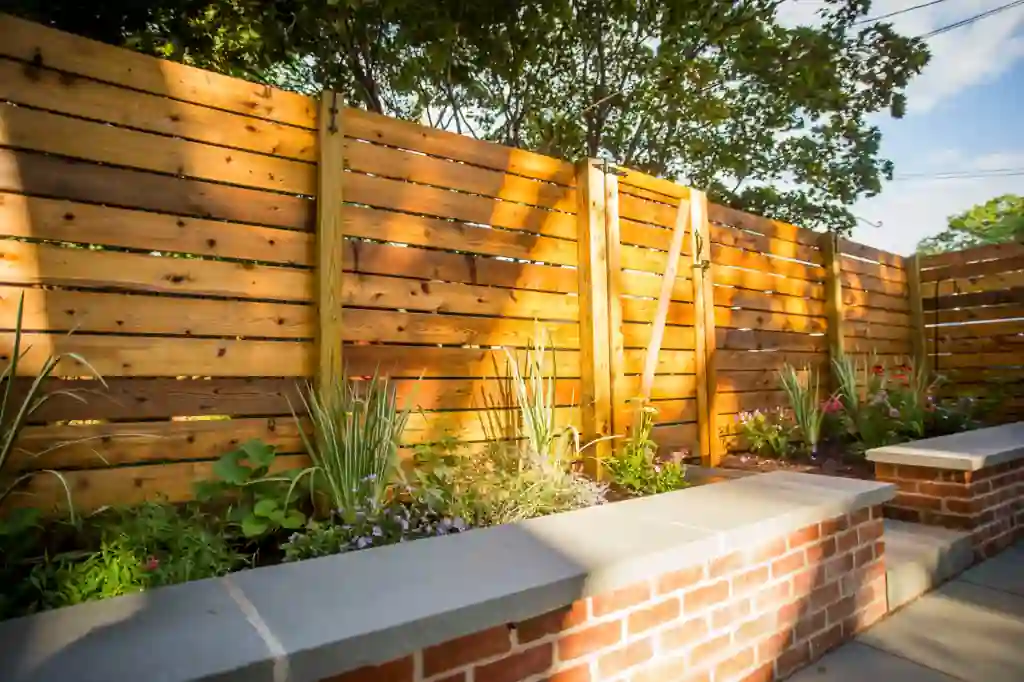
Horizontal wood fencing has exploded in popularity across metropolitan areas like Austin, Dallas, and San Antonio. By orienting pickets horizontally rather than vertically, this style draws the eye laterally, making smaller suburban backyards feel significantly larger and more open.
Horizontal fences pair exceptionally well with modern, mid-century, or modern farmhouse architectural builds. Homeowners can customize the look by varying board widths (such as alternating 1×4 and 1×6 Western Red Cedar boards) or adjusting the spacing between boards to control airflow and light filtration.
3. Wood and Corrugated Metal Hybrid Builds
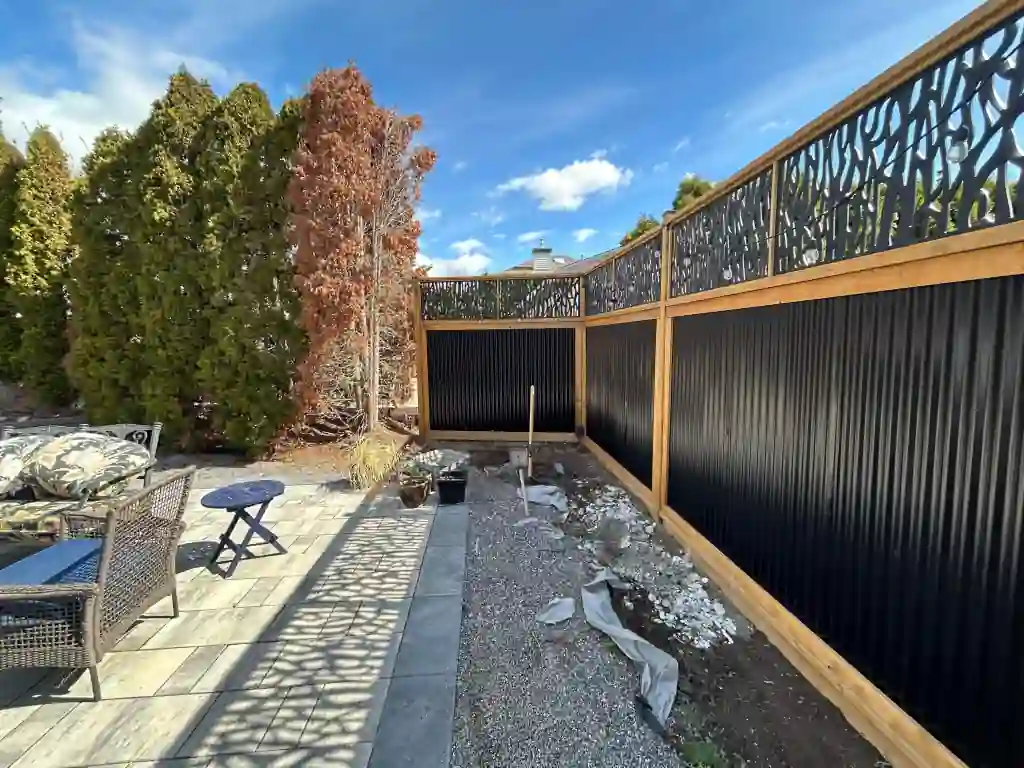
Combining natural wood framing with galvanized or prepainted corrugated steel panels creates an industrial, highly durable barrier. The warm tones of Western Red Cedar combined with metallic paneling offer high contrast and modern appeal.
Beyond visual appeal, corrugated metal panels provide total wind resistance and complete opacity. When built with heavy-duty steel posts and treated framing, hybrid builds resist ground moisture exceptionally well, making them ideal for lower-lying backyard sections or rural perimeter boundaries.
4. Shadowbox (Board-and-Batten) Fencing
Also known as a “neighbor-friendly” fence, shadowbox designs feature alternating pickets attached to both sides of the horizontal support rails. This configuration presents a finished, identical appearance from both inside and outside the property line.
Shadowbox layouts allow air to pass between the staggered pickets while maintaining semi-privacy when viewed straight on. In high-wind areas prone to severe thunderstorms, this airflow reduces wind resistance against the fence face, minimizing stress on post footings.
For a closer look at custom wood configurations crafted specifically for Texas properties, explore the NVS Fence Specialty Design Services.

The Science of Lumber: Choosing the Right Material
The success of any custom project relies heavily on material selection. Texas experiences extreme climatic shifts ranging from sub-freezing winter drops to prolonged summer heatwaves exceeding 100°F. Sourcing the proper lumber species determines whether your barrier lasts 5 years or 25 years.
Western Red Cedar: The Undisputed Industry Standard
When turning creative wood fence ideas into long-lasting outdoor reality, Western Red Cedar stands out as the premier softwood choice. Cedar contains high concentrations of natural organic compounds called tannins and extractives. These natural oils inherently repel wood-boring insects (like termites and carpenter ants) and prevent fungal decay without requiring harsh chemical saturation.
Furthermore, Western Red Cedar features a uniform, straight-grain structure with low density. This internal composition gives cedar exceptional dimensional stability, meaning it resists cupping, twisting, and shrinking when exposed to Texas summer sun.
Pressure-Treated Southern Yellow Pine
Pressure-treated Southern Yellow Pine (SYP) serves as a budget-friendly alternative for structural framing components and horizontal runner rails. Through an industrial pressure process, raw pine is infused with preservatives to protect it against soil rot and fungal decay. While SYP is exceptionally strong, full pine pickets are prone to warping if left unsealed under direct sunlight.
Learn more about selecting optimal materials by reviewing the comprehensive Guide to Types of Wood Fences for Texas Yards.
Structural Engineering: Building to Handle Texas Conditions
A wooden fence is only as strong as its foundation. Many mass-produced retail kits fail prematurely because installers use thin wood posts set in shallow dirt holes. To ensure your custom build remains straight and true, modern professional installations rely on commercial-grade structural protocols.
1. Galvanized Steel Posts vs. Traditional Wood Posts
In Texas clay soils which swell when wet and shrink dramatically during droughts traditional 4×4 wooden posts rot at ground level and snap under heavy wind loads. Premium installations utilize hidden galvanized steel posts, such as PostMaster systems or heavy-gauge steel pipe posts.
Galvanized steel posts are completely immune to ground rot, termites, and moisture degradation. When paired with Western Red Cedar pickets, steel posts provide a lifetime structural backbone that can withstand severe storm gusts.
2. Deep Concrete Footings
Post holes must be dug using heavy-duty augers to reach stable subsoil below the active topsoil layer. In Central Texas, post holes should extend at least 24 to 36 inches deep, depending on total fence height, and be anchored with bell-shaped concrete bases that resist upward soil heave.
3. Heavy-Duty Pressure-Treated Framing
Horizontal support rails (typically 2×4 pressure-treated runners) form the framework that holds vertical pickets in alignment. Spacing runners correctly utilizing three full horizontal rails on 6-foot fences prevents individual pickets from sagging or bowing over time.
For additional insight into sustainable lumber sourcing and wood preservation science, review resources provided by the USDA Forest Products Laboratory.
Essential Maintenance Practices for Texas Wood Fences
To protect your investment and preserve the rich color of natural timber, follow a regular seasonal maintenance schedule:
- Allow Proper Drying Time: If installing fresh pressure-treated framing, allow 30 to 60 days for internal moisture to evaporate before applying stain or sealant. Western Red Cedar can typically be stained sooner once dry to the touch.
- Apply a Quality Oil-Based Penetrating Stain: Apply a deep-penetrating, oil-based exterior stain equipped with UV inhibitors. Stain protects wood fibers from turning gray, blocks moisture absorption, and highlights natural grain patterns.
- Maintain Clearance at Ground Level: Ensure pickets sit approximately 1 to 2 inches above soil or grass to prevent wicking ground moisture, while keeping lawn mowers and string trimmers away from the bottom edge.
- Inspect Hardware Annually: Check gate hinges, latches, and structural fasteners yearly to ensure gate alignment remains smooth and secure.
Explore complete care tips and professional cedar solutions at NVS Fence Cedar Picket Services.