
Parts of a Fence: The Ultimate Component and Structural Guide
Whether you are planning a complete property perimeter installation, repairing a damaged section, or simply communicating with a local contractor, understanding the fundamental parts of a fence is essential. A fence is far more than a simple row of wooden pickets or metal panels; indeed, it is an engineered structural system designed to withstand wind loads, soil movement, moisture exposure, and daily wear and tear.
Consequently, when you know how each component functions, you can make smarter decisions regarding materials, maintenance, and structural upgrades. Therefore, this complete anatomical guide breaks down all core, secondary, and decorative parts of a fence, explaining how every piece contributes to long-term stability and security.
The Core Framework: Primary Structural Parts of a Fence
Every fence regardless of whether it is constructed from Western Red Cedar, pressure-treated pine, vinyl, chain link, or ornamental iron relies on a primary supporting framework. These core structural elements carry the load of the entire fence and anchor it to the earth.
1. Fence Posts (Line, Corner, and End Posts)
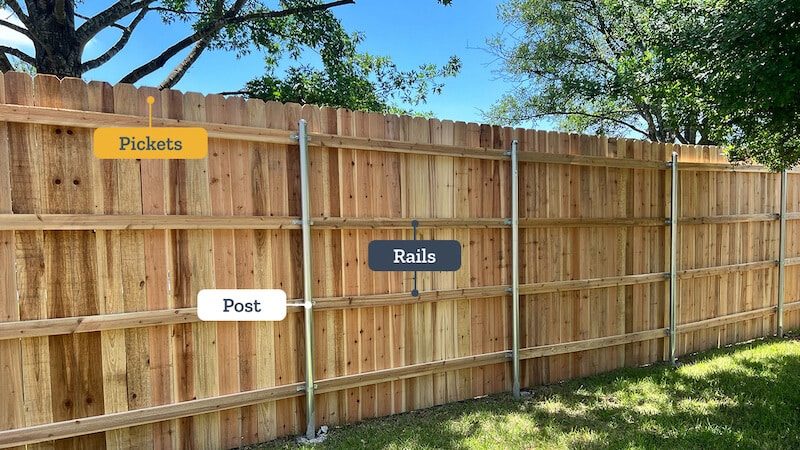
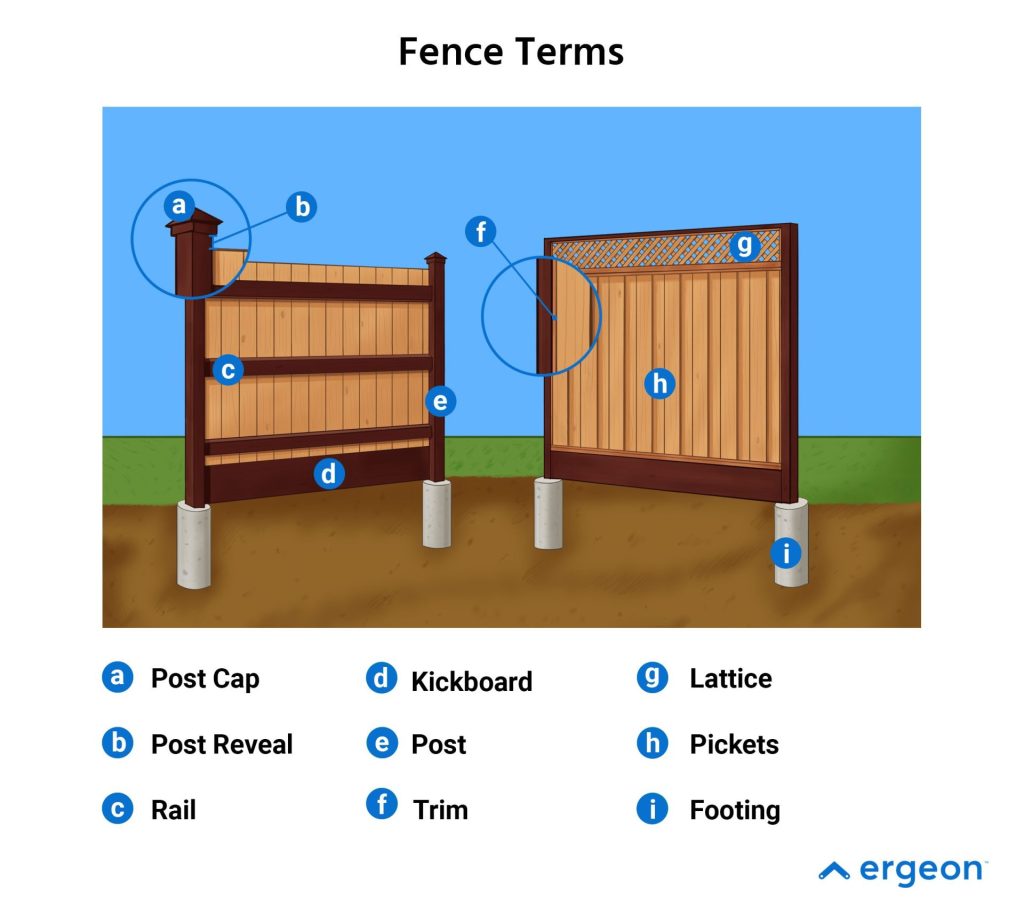
The fence post is the single most critical structural element of any fencing system. Posts are vertical members driven deep into the ground to anchor the fence against lateral forces such as wind, soil expansion, and impacts.
Posts are classified into three distinct functional categories:
- Line Posts: Positioned at regular intervals (typically 6 to 8 feet apart) along a straight run to support horizontal rails and infill panels.
- Corner Posts: Set at 90-degree junction points where two fence lines meet. Because they experience multi-directional tension, corner posts are often thicker or anchored with larger concrete footings.
- End/Gate Posts: Installed at the terminal ends of a fence run or on either side of an entryway. Gate posts bear dynamic loads from swinging gates, requiring maximum structural reinforcement.
2. Concrete Footings & Gravel Drainage Pads
Directly below the ground line sits the footing system. Standard installation practices require digging post holes to a depth of 24 to 36 inches (or below the regional frost line).
A proper installation includes a 2-to-3-inch gravel pad at the base of the hole for water drainage, followed by a poured concrete collar. The top of the concrete should be troweled into a sloped crown above the surrounding soil line to shed water away from the post base, preventing rot and corrosion.
3. Horizontal Rails (Stringers / Runners)
Horizontal rails frequently called stringers or runners span horizontally between vertical posts. Rails provide the rigid framing framework to which individual pickets, boards, or wire mesh attach.
- Top Rail: Runs horizontally along the upper portion of the fence frame, stabilizing the top of the pickets.
- Bottom Rail: Positioned near the ground level, keeping the lower portion of the pickets aligned and rigid.
- Mid Rail: Standard on fences 6 feet or taller, adding essential mid-span support to prevent board warping and sagging.
Screen & Infill Components: Privacy and Aesthetic Layers
While the framework provides strength, the infill components deliver the primary functionality of the fence: privacy, security, noise reduction, and curb appeal.
1. Pickets (Boards or Slats)
Pickets are the vertical boards or panels attached directly to the horizontal rails. They dictate the overall visual appearance of the fence. Additionally, depending on your design goals, pickets can be arranged tightly edge-to-edge for full privacy, spaced out for semi-privacy (as seen in traditional white picket fences), or arranged in a “shadowbox” (board-on-board) pattern to allow airflow while maintaining visual screening.
2. Rot Boards (Mud Sills)
A rot board is a horizontal pressure-treated 2×6 or 2×8 board mounted along the bottom perimeter of a wood fence, resting just above the ground level. Pickets are installed so their bottom edges rest on top of the rot board rather than contacting raw dirt or damp grass.
Because wood wicks groundwater upward, keeping pickets off the earth prevents premature decay. When the rot board eventually degrades after a decade of ground contact, it can be replaced quickly without tearing down the entire fence panel.
3. Top Caps and Trim Boards
For a refined, finished look, many homeowners install top capping. A cap board (often a horizontal 2×6) sits flat across the top of the pickets, shielding the exposed top end-grain of the wood from rain absorption. Vertical fascia or trim boards are then mounted beneath the cap board to create a clean, picture-framed aesthetic.
Fence Component Anatomy Matrix
The table below breaks down the primary parts of a fence, summarizing their core functions, standard materials, and structural roles across residential property installations:
| Fence Component | Primary Functional Role | Common Material Options | Failure Risk If Omitted / Damaged |
| Fence Post | Primary vertical structural anchor | Steel Pipe, Pressure-Treated Wood, Cedar | Fence leans, collapses under wind, or snaps at ground level. |
| Horizontal Rail | Connects posts and supports infill | Dimensioned Lumber (2×4), Steel Tubing | Pickets bow, sag, or detach from the frame. |
| Picket / Infill | Delivers privacy, safety, and aesthetics | Western Red Cedar, Composite, Vinyl, Iron | Loss of property privacy and boundary security. |
| Rot Board | Protects vertical pickets from moisture | Pressure-Treated Southern Yellow Pine | Bottom of pickets absorb moisture, rot, and split rapidly. |
| Post Cap | Shields post tops from water infiltration | Copper, Aluminum, Composite, Mounded Wood | Post end-grain absorbs rain, leading to top-down rot. |
| Concrete Footing | Anchors post against wind and soil heave | Heavy-Duty Concrete Mix with Gravel Base | Posts shift during soil wet/dry cycles or heavy winds. |
Hardware, Fasteners, and Gate Systems
Small hardware components play a huge role in holding the main parts of a fence together. Using sub-standard fasteners can lead to structural failure long before the wood or metal components wear out.
1. Fastener Types
- Stainless Steel Screws/Nails (304 or 316 Grade): Highly recommended for cedar and pressure-treated wood. Stainless steel will not rust or chemically react with wood tannins, eliminating dark streak stains.
- Hot-Dipped Galvanized Fasteners: Zinc-coated steel fasteners engineered for exterior weather resistance and chemical compatibility with treated lumber.
- Ring-Shank Nails: Specialty nails featuring small ridge rings along the shank. The rings grip wood fibers tightly, preventing fasteners from backing out as wood expands and contracts during seasonal humidity changes.
2. Gate Hardware Mechanics
A gate is a dynamic moving system within a static fence line, making high-performance hardware critical:
- Gate Hinges: Heavy-duty adjustable strap or T-hinges distribute swinging weight evenly across the gate post.
- Gate Latch: Gravity latches, drop rods, or key-lockable latches secure the gate in a closed position.
- Diagonal Cross-Brace: A rigid wood or metal brace running diagonally from the bottom hinge corner to the top latch corner. This brace transfers gravitational pull back to the hinge post, preventing gate sagging over time.
For detailed industry engineering specifications, material standards, and structural testing guidelines for perimeter security systems, review the resources at the American Fence Association (AFA).

Professional Fence Installation & Structural Integrity
Understanding the various parts of a fence empowers property owners to inspect their current installations, catch minor structural issues early, and communicate effectively with professional contractors. Choosing high-grade materials such as heavy-duty steel line posts combined with Western Red Cedar pickets and stainless steel hardware ensures your investment stands strong for decades.
At NVS Fence, our team specializes in building custom, high-durability residential and commercial fencing tailored to your exact property specifications. Whether you need a full custom build, gate automation, or structural replacement, we deliver premium craftsmanship built to withstand the elements.