
Understanding Pool Fence Requirements in Texas: A Complete Owner’s Guide
Installing a swimming pool transforms any backyard into a personal oasis. However, the state of Texas requires pool owners to meet serious legal and safety responsibilities. Property owners must enclose every residential or commercial pool with a secure barrier to prevent accidental drowning and unauthorized access.
When homeowners fail to meet local pool fence requirements in texas, they often face delayed construction permits, costly municipal fines, or failed home inspections. More importantly, non-compliant enclosures create major safety hazards for young children and pets.
Navigating the intersection of state statutes, municipal ordinances, and International Swimming Pool and Spa Code (ISPSC) standards requires careful planning. This comprehensive guide breaks down the essential legal rules, structural standards, and installation practices that keep your backyard safe and code-compliant.
Core Texas Building Codes for Pool Barriers
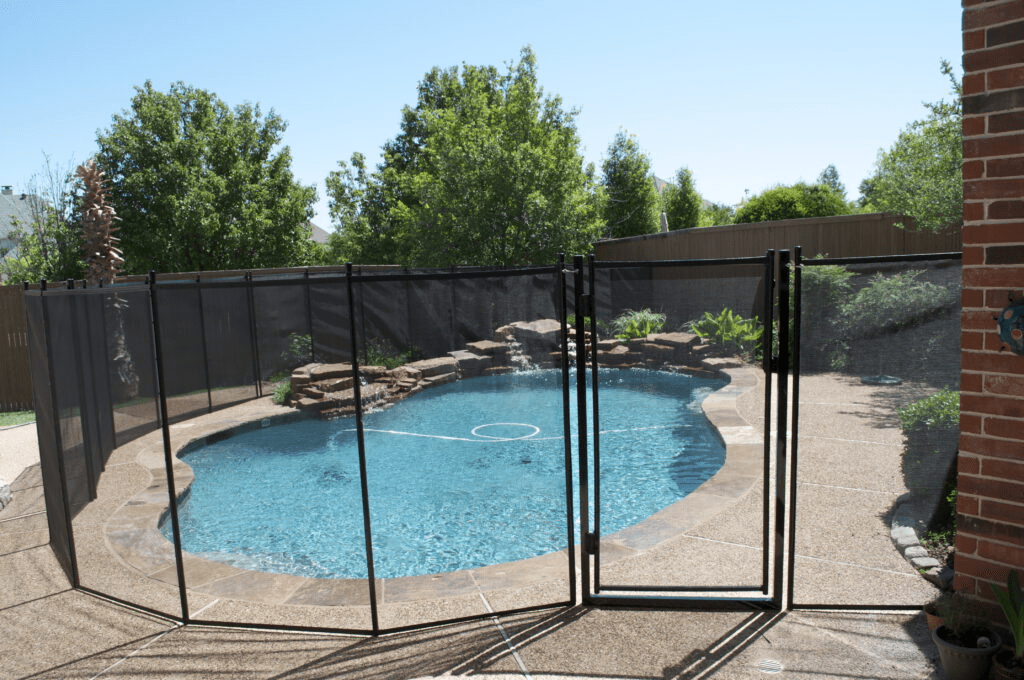
Texas Health and Safety Code Chapter 757 establishes statewide pool safety regulations along with local municipal adoptions of the International Swimming Pool and Spa Code (ISPSC). While cities like Belton, Copperas Cove, and Temple add localized addendums, standard statewide rules enforce minimum barrier dimensions.
1. Height and Ground Clearance Standards
A compliant enclosure relies on precise vertical height and ground spacing:
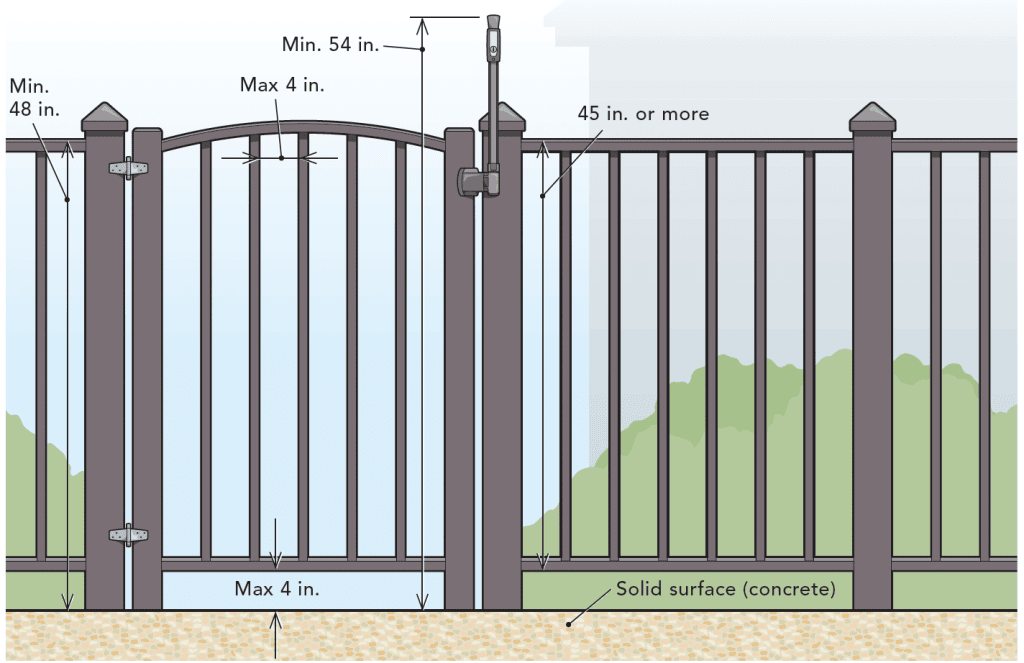
- Minimum Barrier Height: The top of the pool fence must reach at least 48 inches (4 feet) above the finished ground level on the side facing away from the pool.
- Maximum Ground Clearance: Installers must limit the gap between the bottom of the fence and the ground surface (grass, dirt, or concrete) to no more than 2 inches.
- Distance from Water’s Edge: Builders must place the barrier at least 20 inches away from the water’s edge so no one can walk along the pool rim outside the fence.
2. Picket Spacing and the “No-Climb” Zone
Manufacturers design pool enclosures specifically to eliminate footholds and handholds that children could use to scale the perimeter.
- Vertical Gap Limitations: For vertical picket designs (such as ornamental iron or wood privacy fences), contractors must place horizontal framing members spaced less than 45 inches apart on the pool side of the fence. This layout prevents horizontal rails from serving as ladder rungs on the outside.
- 4-Inch Sphere Rule: Installers must space individual vertical pickets tightly so a 4-inch diameter sphere cannot pass through at any point.
- Chain Link Restrictions: Installers must limit standard chain link fencing mesh size to 1.75 inches or smaller unless they add slatted inserts, keeping children from placing their shoes inside the links.
Critical Pool Gate and Latching Mechanism Rules
Municipal code inspectors scrutinize pool gates more than any other component of an outdoor enclosure. A gate that fails to close or latch automatically creates an open path straight to the water.
When you install an access point, strict pool fence requirements in texas govern the following hardware rules:
- Outward Swing Direction: All pedestrian access gates must swing outward, moving away from the pool basin. If a child pushes against the gate from the outside without releasing the latch, the frame catches against the post rather than opening inward.
- Self-Closing Hinges: You must equip gates with tension-adjustable or spring-loaded hinges capable of pulling the gate shut completely from any resting position.
- Self-Latching Mechanisms: The gate must engage a mechanical latch automatically upon closing without manual assistance.
- Latch Height Positioning: Installers must mount the latch release mechanism at least 54 inches above the ground level. If you place it lower than 54 inches, you must attach it to the pool-facing side of the fence at least 3 inches below the top rail, forcing an adult to reach over the top to open it.
Comparing Code-Compliant Pool Fence Materials
Homeowners can choose from several structural materials to satisfy safety statutes while matching their property’s aesthetic style.
| Fence Material | Code Compliance Ease | Primary Advantages | Considerations for Texas Climate |
| Wrought Iron / Steel | High (Pre-fabricated to code) | Open visibility, durable security, elegant look | Requires rust-resistant powder coating |
| Western Red Cedar | Moderate (Requires custom framing) | Total backyard privacy, natural aesthetic | Requires steel posts to prevent ground rot |
| Frameless Glass | High (Sleek safety barrier) | Unobstructed pool views, modern design | Higher material investment; requires routine cleaning |
| Vinyl / Composite | High (Smooth vertical surfaces) | Low maintenance, no painting or staining required | Requires proper anchoring against high winds |
Custom installations using commercial-grade materials such as raw Western Red Cedar mounted on heavy-duty PostMaster steel framing or custom-welded ornamental iron ensure long-term durability against extreme Central Texas weather cycles while keeping your barrier straight and secure.
House-as-Barrier Requirements and Window Alarms
In many residential layouts, the rear wall of the home forms one side of the pool enclosure. When back doors, sliding glass doors, or ground-floor bedroom windows open directly into the pool area, Texas code mandates secondary safety layers.
To comply with state rules when your home forms part of the barrier:
- Door & Window Alarms: You must fit all doors and operable windows that offer direct pool access with UL 2017-listed audible sound alarms. These alarms sound immediately upon opening and produce a continuous tone across the house.
- Power Safety Covers: Alternatively, pool builders can cover the pool basin with a motorized, key-operated ASTM F1346 safety cover that seals the water entirely when not in use.
To explore custom wood, ornamental iron, and privacy options built directly to municipal safety specifications, view our specialized solutions at NVS Fence & Landscape.
Common Mistakes That Cause Failed Pool Inspections
Working with uncertified contractors or attempting DIY installations often leads to costly rework. Avoid these common mistakes when setting up your perimeter:
- Placing Climbable Objects Near the Fence: Placing an otherwise compliant 48-inch fence next to air conditioning units, pool pumps, retaining walls, or patio furniture creates an easy step-up for children, violating the 4-foot clearance zone.
- Incorrect Rail Orientation: Mounting horizontal 2×4 wood runner boards on the outside of a cedar privacy fence gives children a convenient ladder to climb over.
- Inadequate Gate Hardware: Standard gravity latches or basic barrel bolts do not meet self-closing, self-latching laws. You need specialized magnetic latches (like MagnaLatch) paired with tension-adjustable hinges.
- Neglecting Soil Conditions: Central Texas expansive clay soils shift dramatically between dry summers and rainy seasons. Weak post footings cause fences to sag over time, widening bottom ground gaps beyond the allowable 2 inches.
For detailed regulatory frameworks on public and residential pool barrier standards across the United States, review the International Code Council (ICC) ISPSC Guidelines.
Secure Your Backyard Pool with Professional Installation
Following all pool fence requirements in texas protects your family, safeguards your neighbors, and ensures your property passes municipal inspections without delay. From selecting heavy-duty galvanized steel support posts to calibrating self-latching gate hardware, professional guidance ensures your barrier stays fully compliant for years to come.
Contact our team today to schedule an on-site property evaluation, review custom pool fence designs, and receive a prompt, professional estimate tailored to your backyard setup.